Halloween: Costumes and Customs

This Liguori News story is taken from “Halloween: A Season of Saints,” an issue of Liguori Publications’ “Catholic Update” newsletter.
Learn more about Catholic Update at: subscriptions.liguori.org/
Halloween: Costumes and Customs
The tradition of Halloween costumes has its roots in the Middle Ages as a reaction to the outbreaks of bubonic plague, now known as the Black Death. As Europe lost nearly half its population, the survivors were deeply concerned about questions of the afterlife.
Historian Father Augustine Thompson, O.P., writes in a BeliefNet article about Halloween, “More Masses were said on All Souls’ Day and artistic representations were devised to remind everyone of their own mortality. We know these representations as the danse macabre, or ‘dance of death,’ which was commonly painted on the walls of cemeteries and shows the devil leading popes, kings, ladies, knights, monks, peasants, lepers, etc. Into the tomb. Sometimes the dance was presented on All Souls’ Day itself as a living tableau with people dressed up in the garb of various states of life.”
As we and our children choose costumes for celebrating this holiday, we might think about how our choices express who we are, who we want to be, what we desire, what we fear. We might dress as saints; we might dress as sinners. The wide variety reminds us that God’s love is available to all.
The custom of going door to door asking for treats of some kind can be found in a variety of ethnic traditions in Europe and among immigrants to the United States. Sometimes it is combined with a harvest festival; other times it is part of visiting family graves in the cemetery.
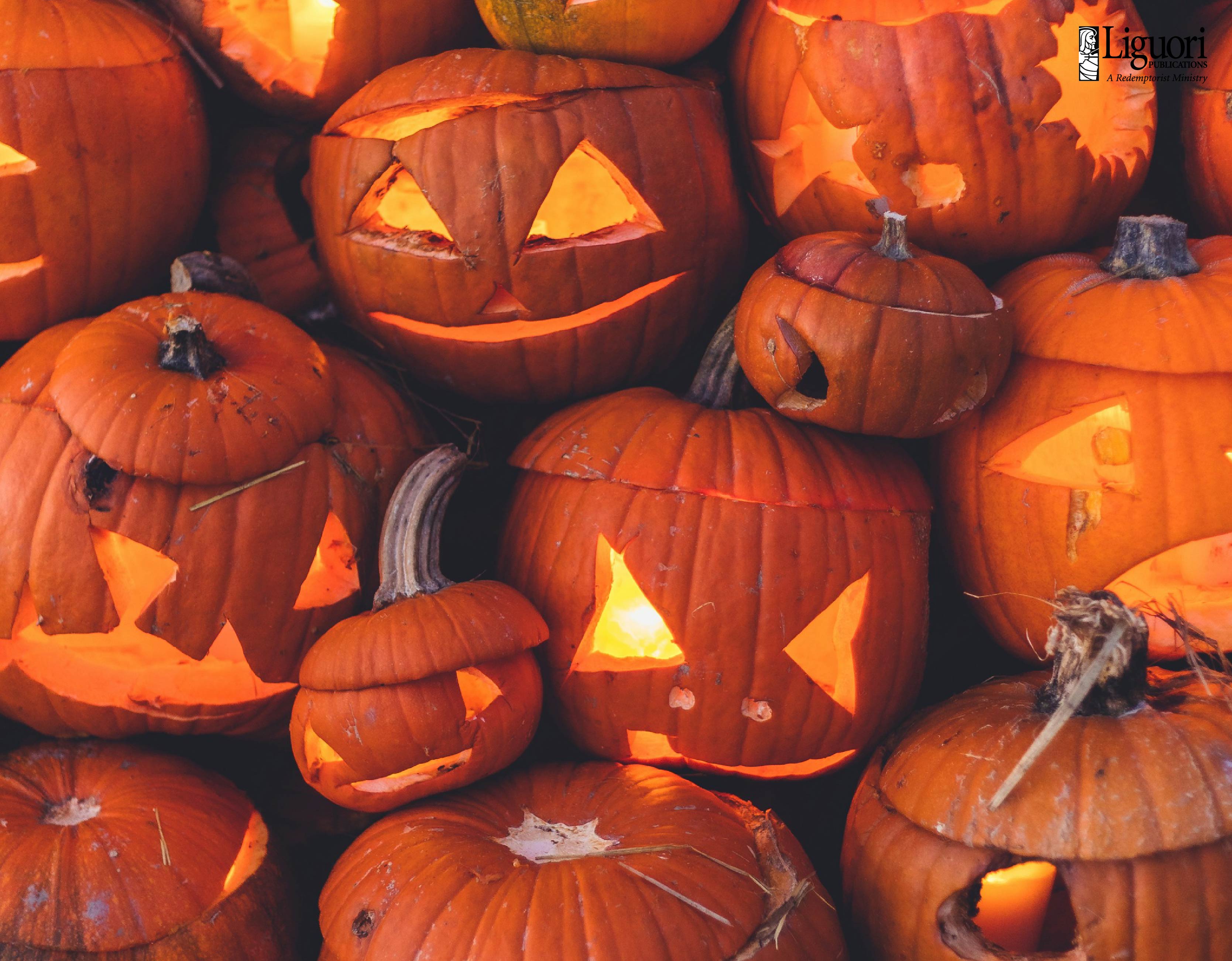
In the Northern Hemisphere, Halloween coincides with the end of the harvest season. Even those of us who live in cities resonate with turning leaves, apples and cider, pumpkins, decorative cornstalks, and other autumn images. It’s no coincidence that as the summer’s vegetation dies and the fields lie fallow, our thoughts turn to our own deaths.
In the Middle Ages there was a superstition that those who had died the previous year without being reconciled to you might rise to haunt you, appearing as will-o'-the-whisps or ghosts. The apparition jarred you so you would release them by prayer and forgiveness. You might appease them with ‘soul cakes’ - cookies, fried cakes, ‘treats’ - so they wouldn’t do you any mischief with their ‘tricks’. Soon those who were living began to use the occasion for reconciliation. To wipe the slate clean for the coming year, they came, masked and unrecognizable, and boldly bargained for treats.
In our own day, whether our children have ready access to candy and other sweets during the year, Halloween is still the kind of super-abundance of treats that we might think of as a metaphor for God’s grace, free for the asking